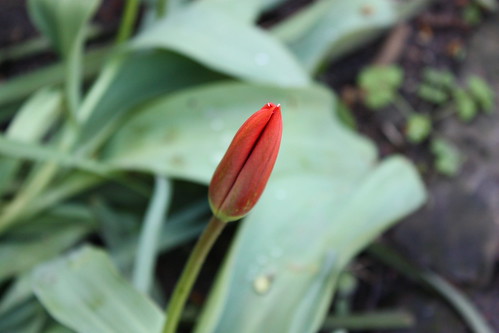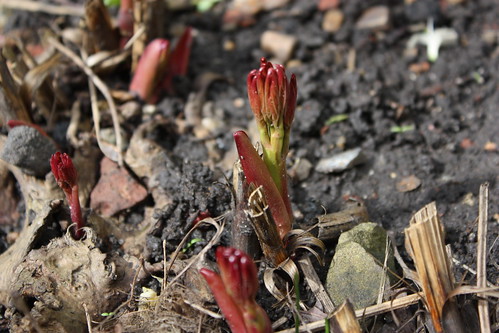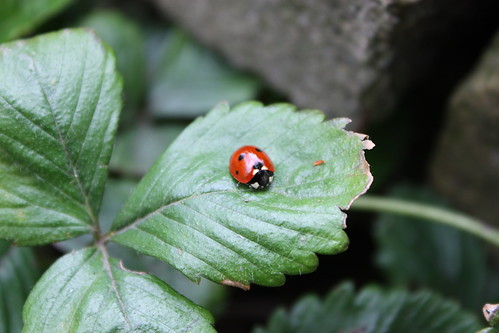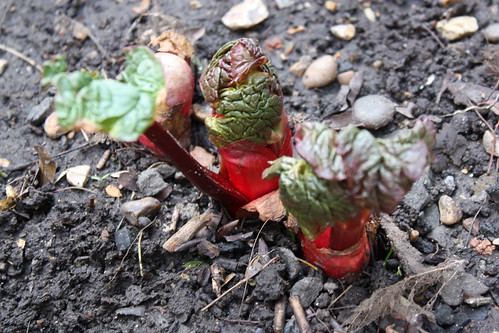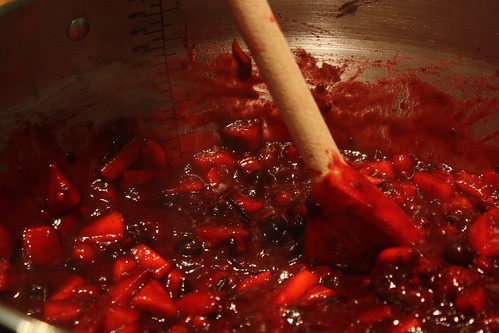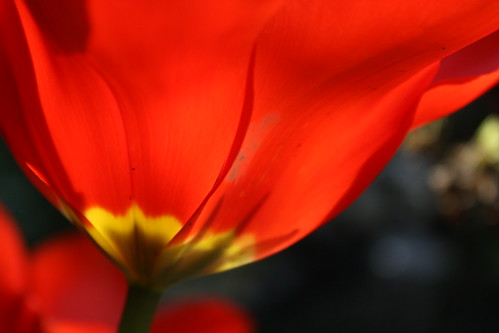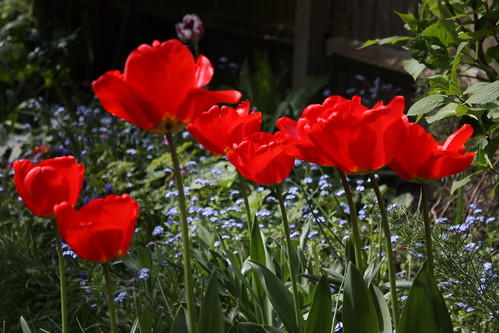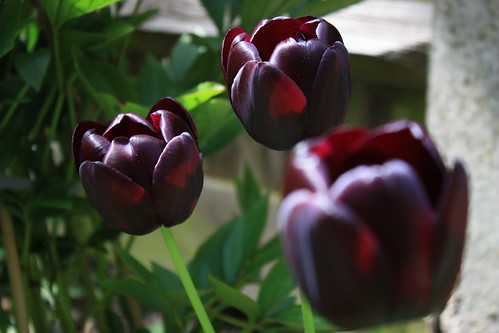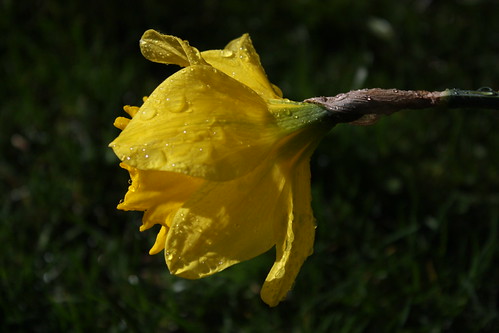
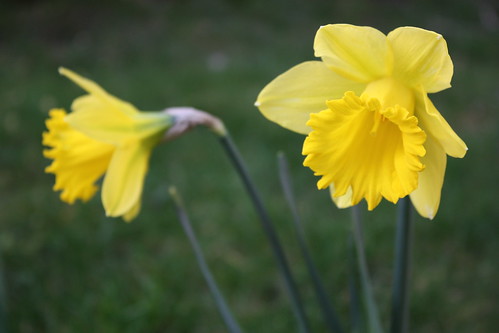
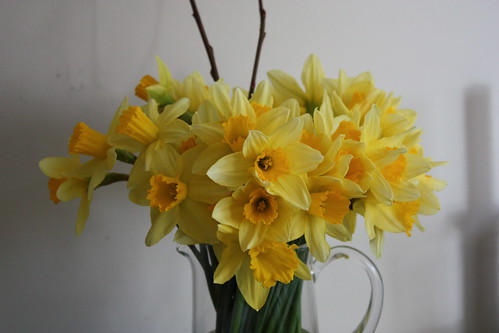
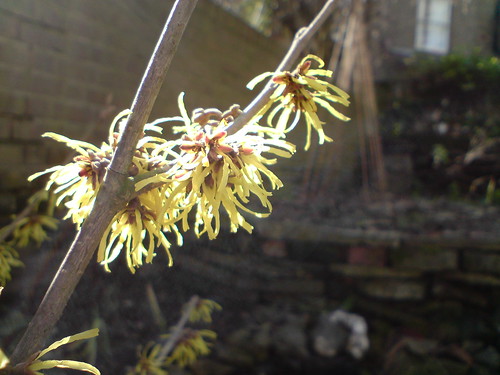
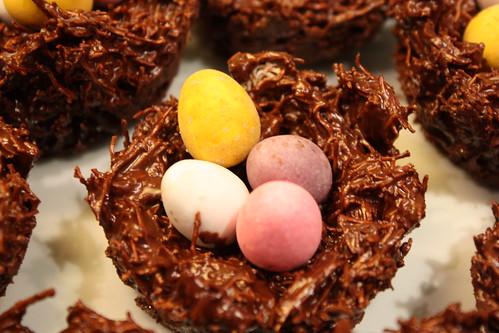
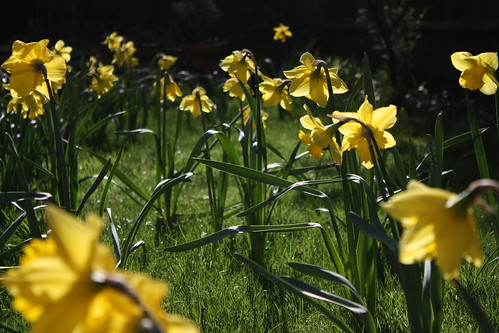

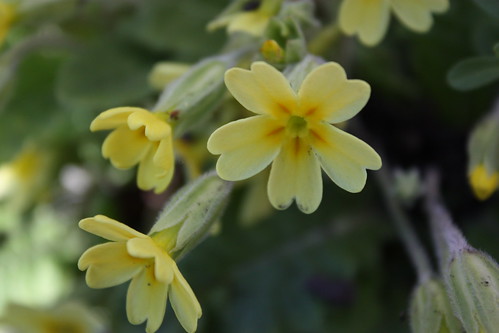
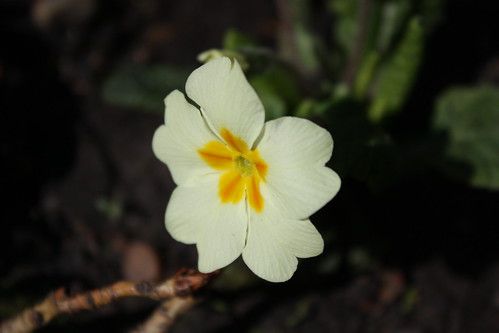
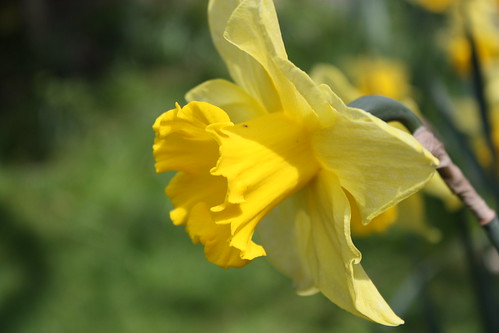
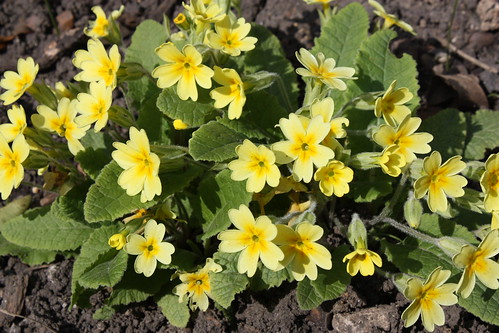
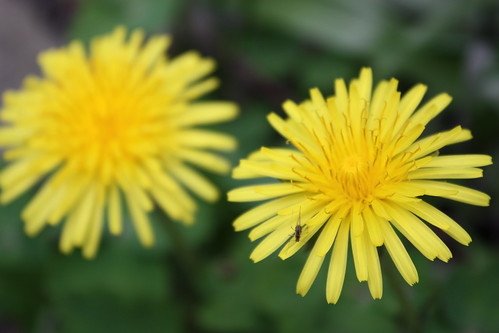
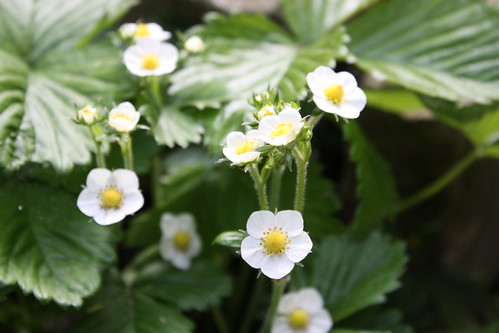
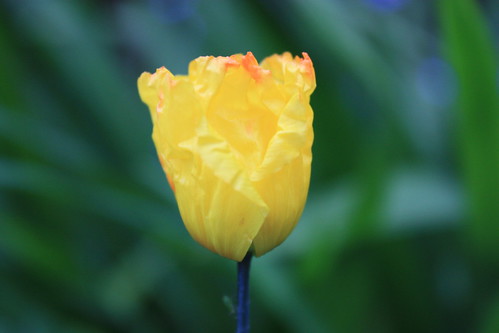

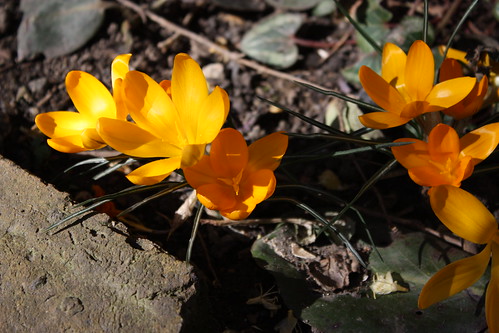
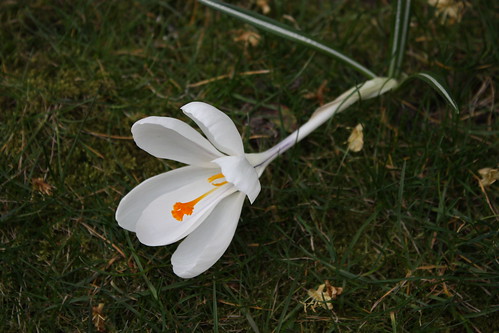
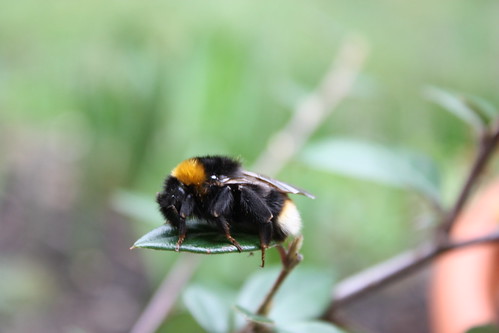
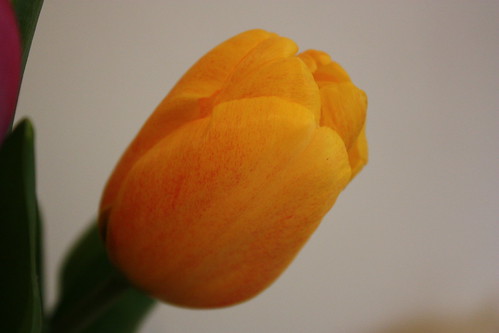
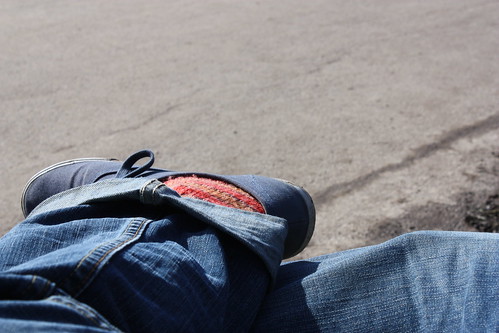
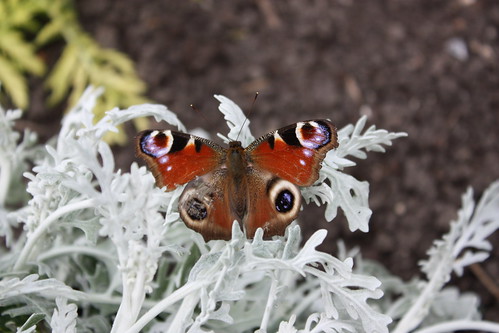
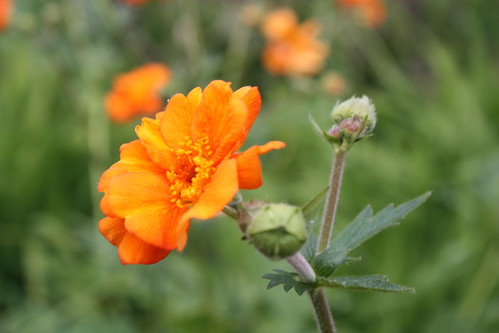
(I cheated a little, the butterfly is Dan's picture, and the socks are old even if the picture is new. Orange was hard!)
 missed garden bloggers bloom day this month (Saturday just gone) as life was a little too hectic to actually blog. I'd taken pictures of the blooms, but there was too much to deal with to be organised in time. No matter though, I had another blog project up my sleeve, and not including the blooms would probably help to that end...
 ay way back at the beginning of spring, resurrection fern had a colour a day of spring themed images to look forward to the coming season (I can't find these posts just now, but they were there). This struck me as a brilliant idea because I'm a bit obsessed with colour, but I didn't have a large stock of photos to draw on. Over a few days this idea evolved in my head a little to a season in review. I gave myself a few flexible rules.
1. A week of colour, a colour a day, the colours of the rainbow: red, orange, yellow, green, blue, indigo, violet. In the end, I struggled with the specificity of blue/indigo/violet and split this instead into simpler blue and purple catagories - thus 6 categories. I think now that I might change some of the colours with the seasons.
2. Images used focus on colour - so that colour choice over the set is obvious.
3. As many unblogged as possible (but not religiously).
4. Only new things, be it from the garden or things made or new experiences. The making has been very limited this past season so this time round it's almost all garden shots.
5. A review of each season: Spring, March/April/May; Summer, June/July/August; Autumn, September/October/November; Winter, December/January/February.
'm starting this tomorrow, Wednesday. I meant to start on Monday, but if I wait for an appropriate day I'll miss out again no doubt and it'll be another idea down the tube. And I'm keen on this, I think it'll be a nice experience and a good thing to look back on. So Wednesday it is.
One of my pictures made picture of the week on Fennel and Fern, pretty exciting (This made my day when it popped up in my google reader). Check it!

 ocks! I started this pair for Dan a long long time ago, one was even finished. A bit of mindless stockinette and a turned heel later and here we are. Dan has new socks, by brain feels a little better and I have solved my casting on problem. Small projects that don't require instructions is all my head can cope with right now, but I need the knitting action. It's not that I find knitting hugely relaxing in and of itself, but somehow it helps me think. If I'm not *doing* anything whilst living through a stressful situation, my brain gets too noisy and stressy and thinks too much. It gets on top of me. The knitting occupies enough of it to keep it under control during necessary fragments of down time, while other quarters finally figure out how to describe receptor endocytosis... (hopefully).
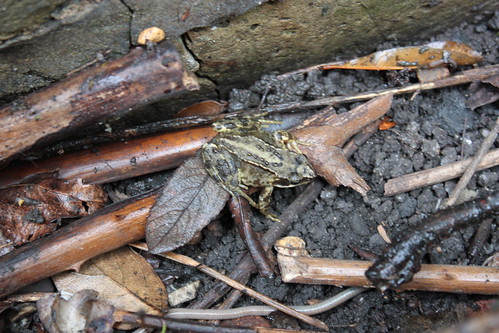
e shifted the pile of rotten wood at the end of the garden over the weekend to make way for some autumn fruiting raspberries and we found a couple of friends :)
 ast spring Dan and I carted frogspawn back from Scotland (we couldn't find any close to home at all - we tried!) to try and populate the garden with some slug busting help. We'd not seen any frogs/toads around at all and given our situation in a tarmac island with high walls, thought we were pretty unlikely to get any unless we helped out a bit. The frogspawn hatched and the froglets eventually left our pond. Periodically we'd find them on our midnight slug hunts through the dank summer of 2009. We thought we'd lost them though this spring. No sign of them anywhere till our neighbour told us he'd found some under his folded up greenhouse plastic. Then when we shifted the wood, down in the rotten leaves, one of our scottish frogs, all grown up. But... he'd also made a friend in Mr. Toad.

 here was another larger, greener, frog under a second pile of wood we moved too. This pile was one of my purposefully built "habitats" for which I have endured a substantial amount of ribbing from Dan (and others). I did a short stint as a volunteer in the Natural History Museum wildlife garden as an undergraduate and they used to build wooden towers out of prunings and fallen logs for things to live in. I'm quite glad my silly habitat's have genuinely turned into homes for the creatures. I now want to crack open the one next to the pond to see if it has become a home too, but I shall resist and leave potential residents in peace.
say "science", because what I'm referring to here is the misuse of scientific language in disseminations produced by two of this nations favourite gardening institutions. Gardening institutions that should, perhaps, know better. Whatever I might pretend in this space most of the time, I'm a scientist in my day job and my love of gardening is essentially linked to by love of biology and biochemistry. I like watching things grow and understanding that process - I get a kick out of it. I am a science geek and usually, when I'm not dealing with writing my thesis, I love it.
 orticulture is a science, because horticulture is essentially biology. Scientist's have a lot to answer for I know, because most of them are so poor at translating their research to the less scientifically minded public. It's an issue I'm aware of. But there is also the issue of scientific buzz words leeking out of the science bubble and getting thrown around a lot by the media, without being properly explained. The two incidents that riled me were performed by the RHS and the BBC. Given the status of both these institutions I find it unbecoming, and because this is my blog I'm going to have a good old rant about it, because I can.
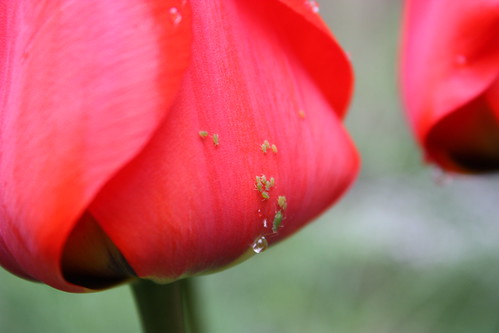
 irst up, the RHS. One of their regular columnists, Ursula Buchan, upon bringing to her readerships attention that the pea aphid (Acyrthosiphon pisum) genome had been published in PLoS Biology, had this to say:
As even we non-scientists have come to realise, mapping a genome is an important step in making possible the modification of undesirable (to us) genes. Can it really be that I can contemplate, in my lifetime, caring for a garden with significantly reduced numbers of aphids in it? I do hope not.
ortunately, dear Lady, I doubt it - as your statement makes no sense. Agro-pharmaceutical companies will, no doubt, try and use this information to make pea strains resistant to aphids, or a pesticide specific to aphids. Should this be successful and either of these products made it to the point of public consumption in this country, you will have the choice of whether to buy them. If you choose not to, you can happily live in your aphid infested garden non-the-wiser. Scientists modify genes in the lab, largely to try and figure out what the protein products of those genes do. Just knowing a gene and deeming it 'undesirable' does not mean it disappears - just look at all those people who still have inherited genetically transmitted disorders (a couple tip of the iceberg suggestions: Huntington's Disease and Cystic Fibrosis). Knowledge of a gene does not instantly conjure up a ray gun to obliterate it at will. And to complicate matters, those genes you're targeting are usually essential, it's just a minor mutation that's rendered them 'undesirable' - obliterating them completely would ultimately kill you outright just as effectively. Perhaps you are confusing embryo selection in IVF with 'modification of ... genes". As far as I'm aware choosing which embryo to implant does not delete the gene in question in either or both of the parents, but gives them the choice not to pass it on through the application of mendelian genetics (which, incidentally, was developed by Mendel whilst studying peas - see, I'm almost forming a nice circular narrative). Good for them. If I carried Huntington's Disease alleles I'd do the same. Unless of course you're proposing that all the embryos of the pea aphid will be screened in some way? Given their short and prolific life cycle, this seems like a complete waste of man hours...
econd up is the unfortunate Toby Buckland of Gardener's World. Toby used the peculiar phrase "the same genetic age" when referring to a basal cutting of a sedum he'd just made. This phrase means nothing in this instance. His point was that his large cutting, with lot's of leaves and roots, was likely to flower that same year. And indeed it would have the same genes because he'd effectively cloned the parent plant. That's what coning is: multiplying something whilst keeping the genome identical. His cutting had the same genome, and it had a good chance of behaving like it was a similar age to the parent, because of it's established root and leaf systems. "Genetic age" though? If he'd taken a single leaf of the sedum and made a cutting, it would still be the same age as it's "parent" - it just would take a little time to grow up and flower. A lazy and inaccurate use of terminology does not help anyone.
Rant over
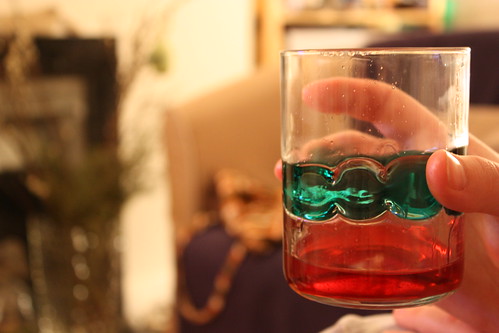
e tasted the home made sloe gin for the first time in the week. It was really really good. Dan wants to give some away as Christmas presents. I'm not convinced we have any to spare...