Showing posts with label gardening. Show all posts

Friday, April 6, 2012

Long distance gardening

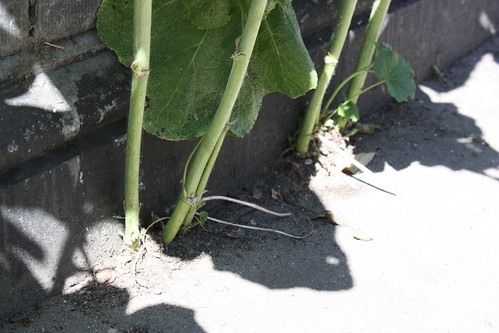
Our tenants have been getting acquainted with our garden, but they're novices so they sent us this picture to help them identify some of the greenery that's shooting up in Spring. The garden seems to grow about a foot a day at this time of year.


I got a bit over enthusiastic in my response (I miss our garden!), and sent the following back. Bit much?
The thing you took a picture of is a hollyhock. I attached a picture for you so you can see it's future. They get quite big and throw up big spurs of flowers which last most of summer in whole range of colours. The bees adore them. They self seed a lot, so if they come up in a really stupid place feel free to pull them out. Also - if you look at the backs of the leaves, you may notice some yellow spots on them. This is a common hollyhock ailment - it doesn't spread to other plants as far as I can tell and it doesn't stop them flowering, but it can make them look very bedraggled towards the end of their season. If you cut off any leaves that have the spots on at the base of the plant now, the hollyhocks will be healthier for it later on - but it won't matter if you don't. FYI the pale green sort of fronds in the bottom left of your picture are yellow poppies (very pretty) and the hairy frondy thing further up on the left is an oriental poppy. Very pleased to see the cowslip flowering away :) Actually - if I just send you this link:
http://www.flickr.com/photos/76662872@N00/sets/72157623250176870/. That's a flickR stream of the garden over the years, it might give you an idea of what to expect!

Monday, April 2, 2012

An indoor garden

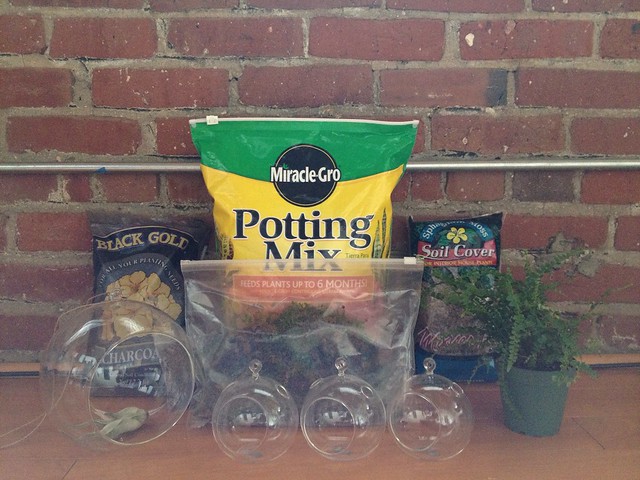
There are mischievous plans being made... Dan and I have been plotting and scheming about creating an indoor garden in our eighth floor apartment. We have very tall (14ft) ceilings and potentially the ideal solution is a hanging garden, preferably one that can be raised and lowered for watering. As always the hard landscaping is Dan's department, and it may be a little while before we have all the hardware together for such a contraption. This hasn't stopped the mad scheming of a gardener in Spring though. Credit where it's due, I was aided in this by the transatlantic Amazon vouchers I received for my birthday.
Day 9
The plot thickens...
What makes this endeavour a garden over a collection of houseplants? Hopefully it will be a collection of plants that hang together (pun intended). Not only that, but to be a garden in my eyes it must also produce things you can eat. We cook a lot and we're missing the ability to add fresh herbs to our food willy-nilly for a start. But we have so much light in this space I feel it almost rude to not attempt something grander. Indoor tomatoes for a start - very doable as long as we remember to hand pollinate. I'm also intrigued by the possibility of growing them upside down. Upside down tomato plants could be quite exciting in a hanging garden...

But then the mind wonders and gets carried away. If we have the cash, what's to stop us heading down the green wall route? I've scoured the internet and these wall pockets seem to be the best designed on the market. At first glance they seem expensive - $40 each. However, when you take a closer look, they're pretty big at two feet wide. You wouldn't need a huge number of them to look effective. In fact even just one to start would be great. And I have to remind myself that $40 is only £25, which is easily what an attractive planter can set you back at the garden centre (I've never bought a planter, but that's another story). Plus, plus, plus (trying to convince my most loyal reader and husband here) - they will fit easily in a suitcase to take back to the UK when it's time to move home again.

Garden designers are constantly telling us to think of our gardens as a series of outdoor rooms (I'm still to be sold on that one). I think in my minds eye I'm planning this garden as a series of mini-gardens within our one big room. I want our garden to include terrariums as well. There tragically fashionable I know - certainly if the air of Portlandia around the books I found on Amazon is anything to go by - but they can each be a world on their own. In essence, they allow the creation of discrete habitats to suit particular plants. Instead of finding the plant to suit the position and soil conditions, I can create the conditions for the plant I want. And, if we're going down the route of terrariums, these Japanese moss balls have got to be worth a go, surely?

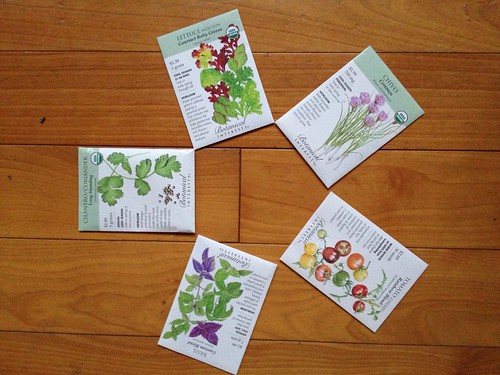
I am getting carried away now, and I must start a little more modestly. I bought some packets of seed at the weekend and I shall be keeping my eyes pealed for suitable temporary containers to get them sprouting. Basil, coriander and chives to start. Rosemary, thyme and sage will be better bought as plants from the Italian market, I think. Plus a lettuce mix, because if it's grown in the right way it should do well as an indoor crop.

Seed packets

You know, I've just come to the end of writing this post and realised the best thing about this whole scheme - no slugs and snails!! There will be no midnight slug hunts in America... (there are also, alas, no toads and frogs in this scheme, but I have reliable reports from out tenants that the population we introduced back home is thriving).

Wednesday, February 2, 2011

From disaster to hope: February begins

January Garden disaster

T
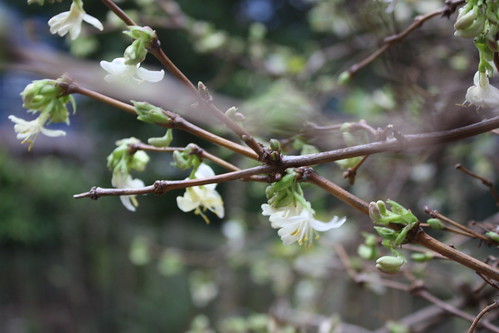
he most amazing thing about a garden at this time of year is how quickly it returns back to life. Even as I was looking at it and feeling completely despondent, that I had let all my previous years of hard work down, things were happening underground. As I've cleared up I've uncovered many things and already the garden looks like the stage is being set for springs arrival. It's hard to express how I feel about the winter honeysuckle, it's the centre of life in our garden and the very first thing to say hello to the new year. It flowers for weeks upon weeks and, thanks to the number of bird feeders hung in it, it's the centre of bird and bee life in our garden too.

January Garden disaster

A
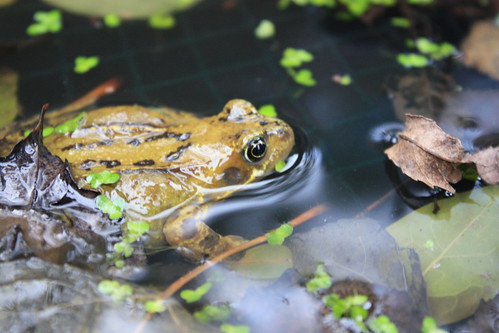
s I cleared the leaves from the surface of the pond I found this amazing creature. A very beautiful and very fat frog (with a distinct scottish twang in it's croak of course). Dan and I are hoping that this frog is a girl frog that this will be the spring we finally get frogspawn. She/he was too fat to get through the pond net, so I gently removed some of the leaves and peeled away the net so it could escape into the pond proper.

January Garden disaster

I
'm now aware that the world has moved on a little and it's February. This is a relief to be honest, as January was rather crazed. We achieved great things in January - we completed on our flat so it's finally ours, Dan secured a job in Philadelphia and I wrote my first grant application. We also took one or other of the cats to the vet on a weekly basis, but that's another story. January 2011 was epic, but the rest of 2011 isn't likely to be any different. In the months to come this year we are going to get married and then emigrate to the US.

Sunday, January 23, 2011

The Catalogue of Disasters: Part Two, Back Garden

January Garden disaster

S
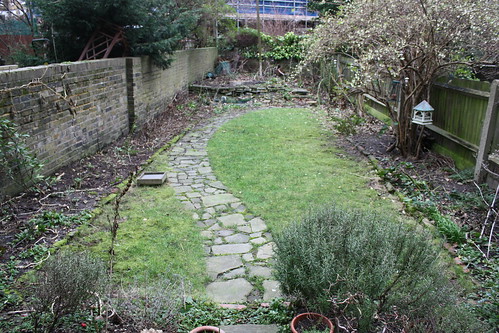
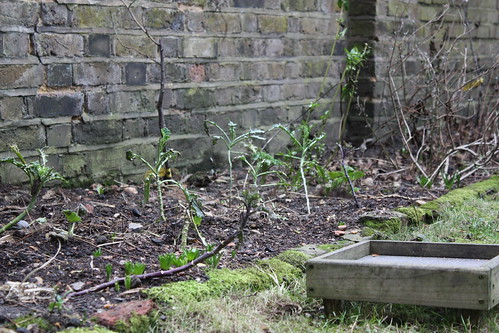
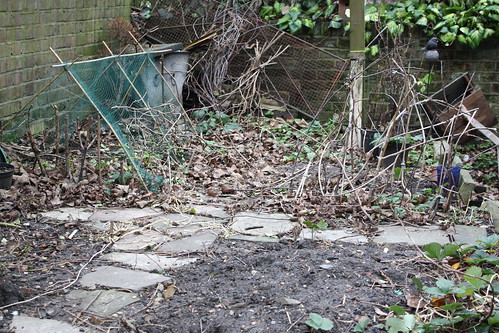
hould probably crack on with the catalogue of disaster so I can move on and start sorting it out. Above is the back garden in its half rotten glory. The lawn is more moss than grass and the borders are barren. I know it's not the best time of year, but it could have been so much better. When I pulled out the teasles last year I planted up some brassica in their wake. I'd given up on the 'vegetable patch' as it gets very little sun and nothing ever thrived in it, so I put the empty borders to use instead. Take a look at my veg now:


January Garden disaster

T
hat's what you get for not protecting your lovely leafy greens from the slug and snail population. Money (not much admittedly, but still), time and effort wasted. Moving on from Exhibit B, we have Exhibit C - a closer inspection of the aforementioned vegetable plot. The strawberries are alive but that's about it. There were a lot more cabbages here too - but they've entirely disappeared. Note the fallen over bird table in the corner, sooooo this season daaaaarlinks, every garden should have one.


January Garden disaster

F
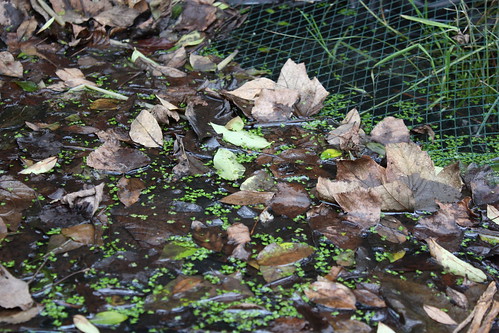
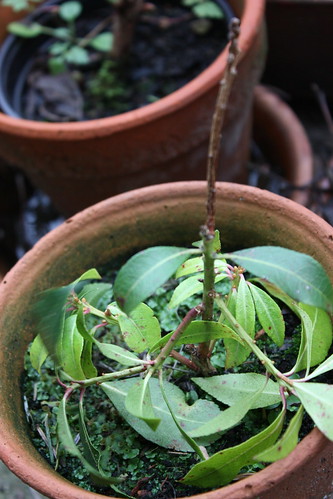
inally, Exhibits D (above) and E (below). We didn't pick the leaves from the surface of the net and then with the weight of snow and ice in December, the net collapsed. Stinky leaves, yum. More on that later. The last image is a Pieris. A grew this as a cutting taken from my Mother's garden. It had never thrived - barely grown in four years - until this summer, when I finally figured out it needed acid soil and started treating it accordingly. It put out a great rush of leaves at the end of the summer and was looking very happy. Now it's new arms have been broken under the weight of snow. I hope it recovers, there are still some intact branches, but I have not made its life easy.


January Garden disaster

Thursday, January 20, 2011

The Catalogue of Disasters: Part One, Front Garden

A
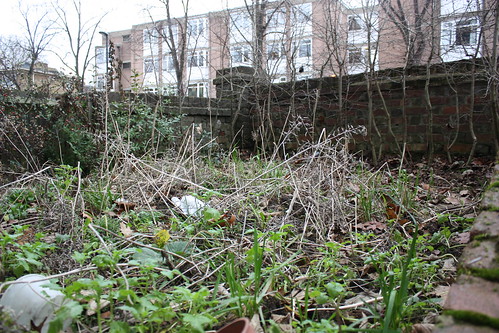
s sworn by myself, the current situation of the `garden'. It is at this point necessary to say I'm not sure I can call myself a gardener anymore - more someone who happens to own a garden. First up, the rarely photographed and much maligned front garden. It's always been an issue, since before we even moved in. The builders/cowboys dumped all the rubble on it and compacted the earth, destroying any vestiges of plant life in the process. As with the back garden we inherited scrubland, but with two fatal flaws: firstly, there's a lot of clay in this patch that's almost impossible to dig; secondly and probably more importantly, as it's on the street it's not a nice place to work - one feels very exposed.

January Garden disaster

T
he hedge at the back is the hawthorn hedge we planted 4 years ago, and it grows well. Two summers ago we fought with the clay and grew potatoes to keep the weeds down and break up the soil. It was about 50% successful. This summer we sowed green manure to try and break up the soil more. I'm not convinced it worked at all, but the remains of this sowing is what you can see now because we never had time (or inclination) to dig it in. Dan's idea is to build raised beds and add compost/topsoil/grit over the top. A good suggestion, but I'm worried this will effectively created a clay-pot under whatever we plant and stop them becoming established. Beds would be separated by small paths so we can walk around the square easily, established using membrane dressed with slate, gravel, wood-chip or similar. Also a good idea, but I'm inherently mistrustful of membrane (as is Dan). It's an easy solution to keep the weeds down to be sure, but I dislike the artificial separation between earth and sky it creates. On the other hand, this is basically central London so my feelings on the matter are probably irrelevant; this patch of earth exists surrounded by brick and concrete, if it looked less abandoned it would know doubt be a win for all passersby and it's certainly not supporting much wildlife right now. Opinions?

Tuesday, January 11, 2011

Last of the melting snow

Christmas 2010

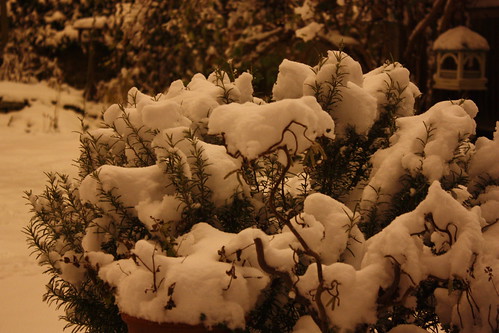
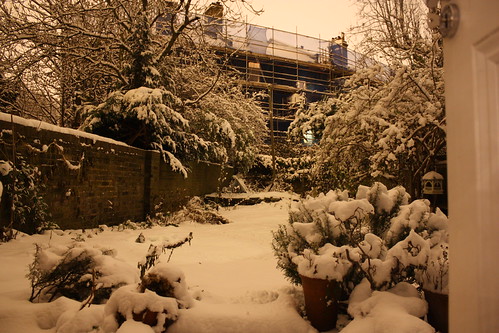
These images were taken in the deep snow before Christmas, just before midnight I think. London (or any big town or city I imagine) glows orange in the snow, every surface becomes luminescent. The exposure on the camera wasn't even that long to capture these images. This was the prettiest the garden had looked for a very long time, under it's forgiving iridescent blanket. I'd like to say it was the weight of snow which has led to our borders currently looking like abandoned strips of municipal earth, but sadly the neglect goes much further back to at least September. I am setting myself the challenge this weekend of cataloguing the dire straits of the garden, both front and back, and putting together a new year plan of action. This is the year of being organised - there's too much going on to be anything less than hyper-efficient.

Christmas 2010

Thursday, October 28, 2010

Success and Failure

Aubergine

Its' grim, wet, windy and cold. The growing season is over. In an attempt to learn from our mistakes, I shall now take stock and recount the successes and failures of our growing year - for which I had such huge aspirations.

Success: Very early sowings of spring peas. Delicious.
Fail: No where near enough home grown peas! I failed again to get good successional sowings going. The first batches I planted in loo rolls in the cold frame did very well. The rest I tried to direct sow when the weather was warmer failed miserably. Eaten by slugs I suppose. We were a lot less diligent on the slug hunts I think than in previous years.

Success: Our first apple!
Fail: Hardly any strawberries. I split last years plants before they were well enough established to deal with it.

Success: Tomatoes in large quantity and four varieties.
Fail: Last year I grew the tomatoes in tiny pots where they struggled valiantly and gave some yield at least. They were very straggly though, and kept falling over in the wind as well as running out of water constantly. This year I bought them massive pots, but they just grew four times as big, became even more ungainly and still toppled over.

Success: Cucumbers (Burbless Tasty). Had quite a few through the summer, think we got the hang of them this year. Probably would have increased yield with better feeding, but I think I failed most things on the feeding front in the latter half of summer.
Fail: Courgettes and Pumpkins/squash, or lack there of. Epic, epic fail. I sowed courgette seed late and most of it failed to germinate anyway. The two that did were miserable things and barely flowered. Good germination with the pumpkins and squash, buckets of flowers in many cases, but never a fruit you could eat. Again, I suspect I failed them on the feeding requirements, in that they didn't really get anything. Bad me.

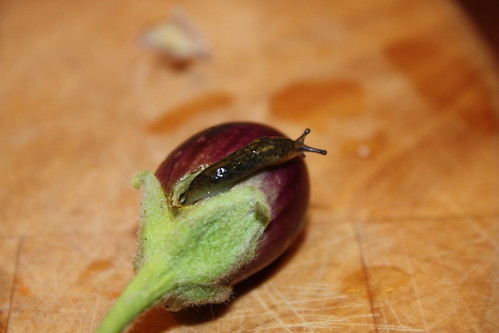
Success: I grew a variety of miniature aubergines (Ophelia) this year. Much more successful than the fully grown kind and we had several fruits. Highly recommended. Dan's cousin who lives just round the corner grew nothing but aubergines of the larger variety this year and got nothing for her trouble, so there you go.
Fail: Despite the relative success of baby aubergines, there weren't that many. Most came towards the end of the season when there was precious little sunshine to bring them on (a common problem with aubergines). It's hard to know whether they're worth the space given to them.

Fail, fail, fail, fail: Carrots, parsnips and anything else we tried to grow in the "vegetable patch" - the raised area at the end of out garden than in another situation would be perfect as such. As it is, it's too shady by far and nothing thrives. Time to rethink where to grow things.

Friday, July 23, 2010

Teasels

IMG_3376

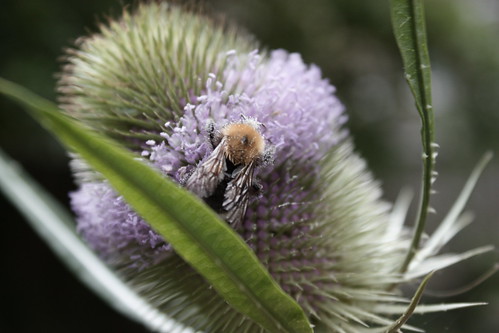
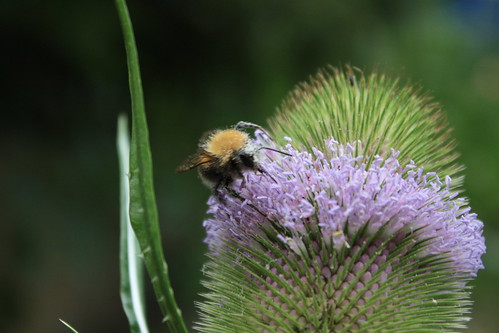
I'm still obsessing over the Bees, but the Bees themselves are currently obsessing over the teasels, to the point where they're pretty much covered in pollen. Quite honestly, from even the most disinterested garden design standpoint, the teasels are a disaster. They're biennial so I've not had them in the garden before now, and it's been a long wait. But they're too huge in this compact London space, and currently choking out more delicate things. I'm still slightly in love with the prehistoric gigantic nature of the beasts, but it's a pleasure I'm going to have to put off for a grander scheme than this. Currently my dilemma is whether to yank them out after the Bees have done with them, or leave them so the Birds get some seed.... hmmmm. Opinions?

IMG_3384

Thursday, July 22, 2010

Small things I made

IMG_3157

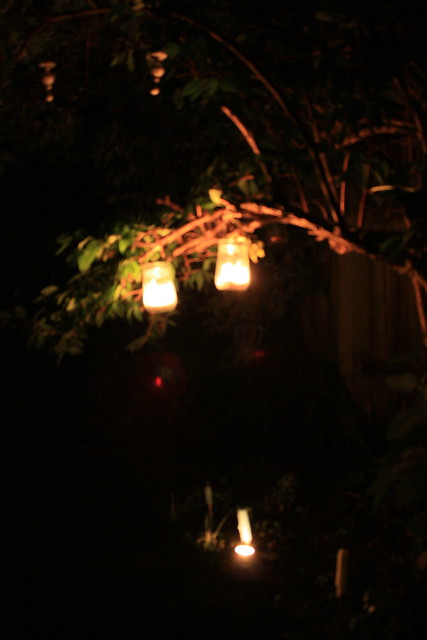
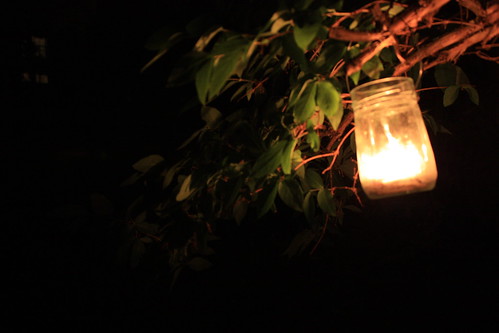
Back in June, whilst there was no gardening or knitting to speak of, I did manage to find half an hour to make these lanterns and decorations for our winter honeysuckle. The strange bits of dangly ceramic were bought in a charity shop for not very much. Not sure what they were originally, but I fashioned some largish hooks out of heavy gauge wire and now they sit in the tree. While I was at it, I finally got round to adding handles to our old jars so they could hang in the tree too. Not exactly glamourous, but pretty enough at dusk.
IMG_3161

Of course the reason everything was so quiet was that all my energy was going into producing another thing entirely. That thing I made was my thesis. It was finally printed on Friday, bound on Monday and submitted on Tuesday. I'd like to think aspects of it were aesthetically pleasing, but a fair-isle sweater or well maintained veg-patch it is not. This is the start of a strange new world for me to be without it.
Thursday, July 15, 2010

Amsterdam

IMG_3177

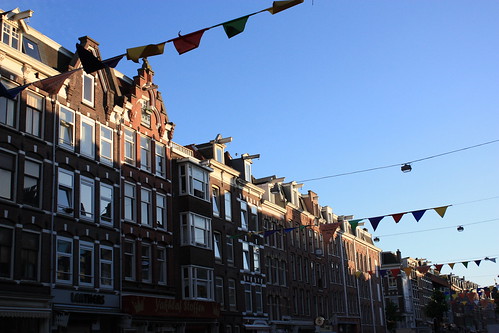
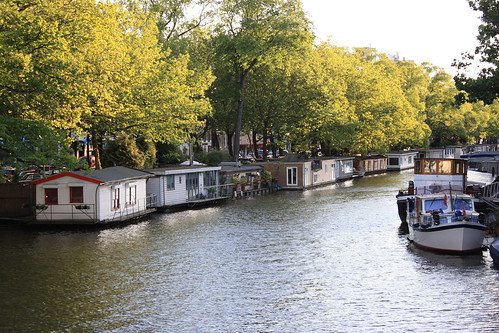
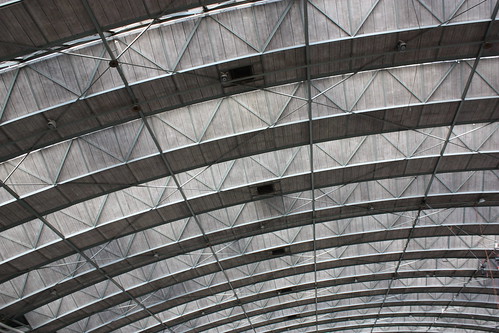
The first week of July I spent on conference in Amsterdam. I'd never been to Amsterdam before, had very few expectations and left feeling pleased with the place and wishing to spend more time there. It felt very familiar and easy, as well as peaceful and relaxing. The virtual complete lack of cars rendered an otherwise dynamic and exciting city, particularly easy to loll about it - especially along by the canals whilst drinking white beer. I spent most of my time here, in the RAI conference centre:

IMG_3182

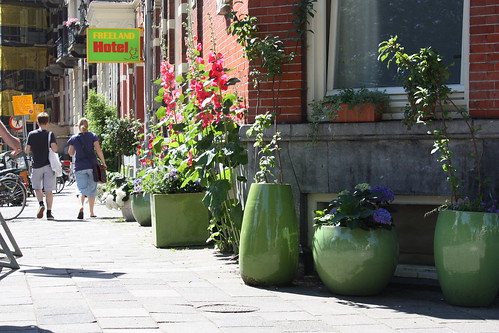
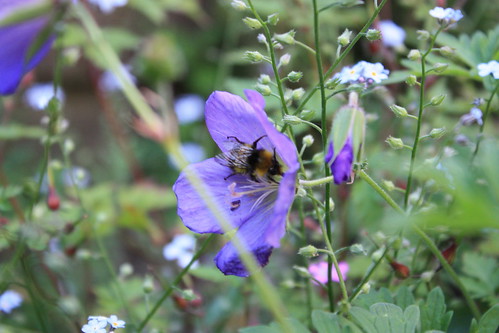
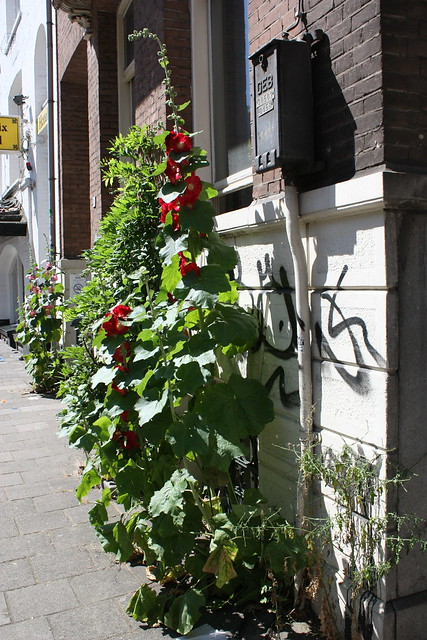
...but it was Amsterdam, so there were a few floral delights to be had amongst other more serious things. I was most enthralled by the streets giving birth to an impressive range of Hollyhocks that were seemingly growing straight out of the pavement.

IMG_3184
IMG_3185 IMG_3186

I made it to the flower market too, but honestly I was underwhelmed. It felt sterile and lifeless. I know I'm a spoilt rotten Londoner with my regular visits to Columbia Road Flower Market, which is a heady (and costly) experience any Sunday of the year. Yet, plant fetishist that I am (and particular lover of bulbs) I left Amsterdam without a purchase. The varieties of tulips on offer were dull and uninspiring, and everything else had 'Do not touch' signs on it. Half the pleasure of a trip to the market (or garden centre) is fondling the foliage and stroking the petals.... I'm not even giving space to the market photos, they can live together in this montage and be done with:


Created with flickr slideshow from softsea.


Anyway, regardless of what was a minor dissappointment, here's to a pretty city, and to dreams of going back (still need to check out the Van Gogh museum at the very least, if only for the Dr Who geekery of it all). And if I can entice you further, here's a city guide from 6 music's Laverne show. Just to be ultra obnoxious, I got to go to a pretty cool party at Melkweg whilst in Amsterdam, it really is a cool place...

IMG_3196
IMG_3194

Saturday, June 12, 2010

Name that Bee

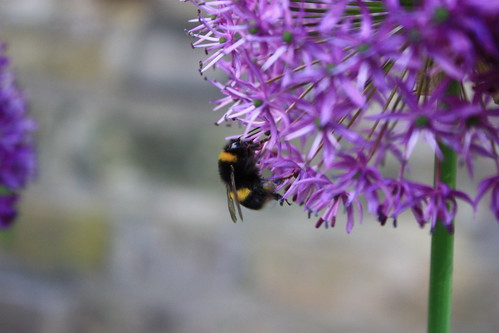
We seem to have a broad variety of bees in our garden, and whilst pratting about photographing them I started to idly wonder what species they were, in that weird science-y way that sometimes comes over me... Thus, I found my new favourite toy from the always gothically mysterious, Natural History Museum: Bombus. Amazing. And so -
Early June Garden
this is B. terrestris, the Buff-tailed bumblebee. Probably a worker but possibly a queen; the tail is quite yellowish.
Early June Garden
This is a southerly specific bee, B.hypnorum or Tree bumblebee. Can't decide between queen, worker or male from this shot.
Early June Garden
The wings are in the way here and its a bad angle for looking at his/her bottom... I know it's not terrestris by comparison so on that basis I'm going with B. lucorum the White-tailed bumblebee, but I'm not convinced.

the best thing about this game is that I know there's other species in the garden yet to be photographed...

Monday, May 31, 2010

The Unexpected

a hot May weekend

Four years ago, when we moved in to this flat and reclaimed the garden, very little was left to give that 'garden' feeling. I can list them very easily: winter honeysuckle, two neon pink roses, a leaf of a sedum which somehow grew into a clump, forget-me-nots, bluebells, a creamy peony and a half dead hydrangea. Oh and the one bramble we left in for fruit. That was it - literally. Every single other growing thing was added by us, including the lawn. This short list left quite large expanses of empty borders to deal with.

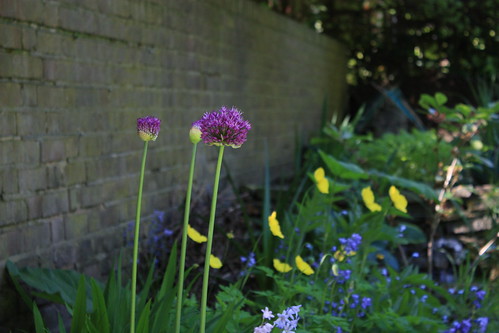
Iargely my approach was to dump whatever we managed to beg, steal and grow from seed into the available gaps based on what colours I wanted to see together with a cursory nod to conditions said plant would like to grow. Chaos was added by leaving anything to that wanted to self seed to it's own devices. Now, last year I plonked a load of alliums in, having never grown them before. This has led to a mixed result. Firstly the gloriously unexpected acidic colour combination above: allium purple sensation and welsh poppies. It's actually even better now, this picture is a week old - more alliums and more poppys in flower. I want to improve on this further by seeding more of the prolific poppies under the alliums over the summer. Unfortunately, the Mount Everest alliums did not fair so well. For one, they're midgets and you can't even see them at the backs of the borders and for another one lot is in a hopeless place and have been squished under cat traffic. The picture below is an official reminder to self to move these once they've finished they're attempt at flowering - together with the agapanthus and iris swamped under the unexpectedly huge hydrangea.
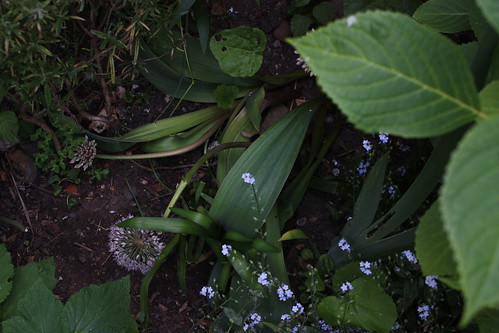
Jobs to do

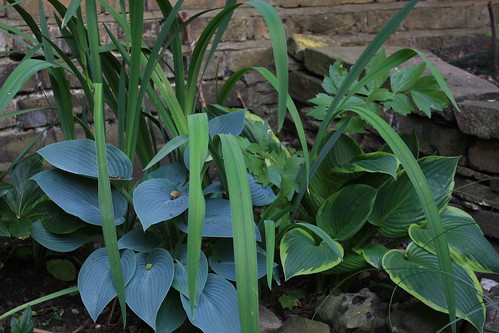
While I'm here giving myself a list of things to do - I need to lift and divide the hostas and flag iris' behind the pond when the time is right:

Jobs to do